Category catalog
Thermal Insulation
Industrial thermal insulation exists to slow the movement of heat across a boundary — out of a furnace, a boiler, a steam line, or a process vessel — and every material that does this works the same way: by trapping air or gas in a structure that resists conduction, convection, and radiation.
Products in Thermal Insulation
20 catalog items available for review


Understanding Thermal Insulation
Industrial thermal insulation exists to slow the movement of heat across a boundary — out of a furnace, a boiler, a steam line, or a process vessel — and every material that does this works the same way: by trapping air or gas in a structure that resists conduction, convection, and radiation. What separates one insulation material from another is not whether it insulates but the conditions it survives while doing so. Temperature is the first constraint, but rarely the only one. Load-bearing capability determines whether a material holds its thickness under cladding and pipe supports or crushes into a thermal bridge. Moisture resistance determines whether it keeps working outdoors and whether it causes corrosion under insulation on the pipe beneath. Thermal mass determines how much fuel is spent reheating the lining itself on every cycle. Zenco Systems supplies the full range of industrial insulation across Kenya and East Africa — ceramic fibre for the highest temperatures, calcium silicate where rigidity is needed, mineral wool for large-area economy, and foil-faced systems where moisture control governs.
Supply & Delivery
Zenco Systems Ltd supplies Thermal Insulation to industrial buyers across East Africa. Availability, packaging, transport, and documentation are confirmed by the sales team before dispatch.
Insulation Material Families and Where Each Fits
Ceramic fibre
The highest temperature capability at up to 1260°C, with very low thermal mass. The default for furnace and kiln linings, especially on equipment that cycles, because little fuel is wasted reheating the lining itself. Soft and not load-bearing.
Calcium silicate
Rigid, load-bearing board to 1000°C. Chosen where the insulation must hold its thickness under compression — pipe supports, high-pressure steam lines, structural backup behind a hot face. It does not settle the way soft blankets do.
Mineral wool / rockwool
The best cost per square metre across large low- and medium-temperature areas to around 1000°C. Standard for ducting, casings, vessels, and general pipework. Loses most of its performance permanently if it gets wet.
High temperature textiles
Woven cloth, rope, and tape to 1260°C for irregular geometry — joints, seals, expansion gaps, and anything that cannot be wrapped with board or blanket. Flexible where rigid products cannot conform.
Foil-faced insulation
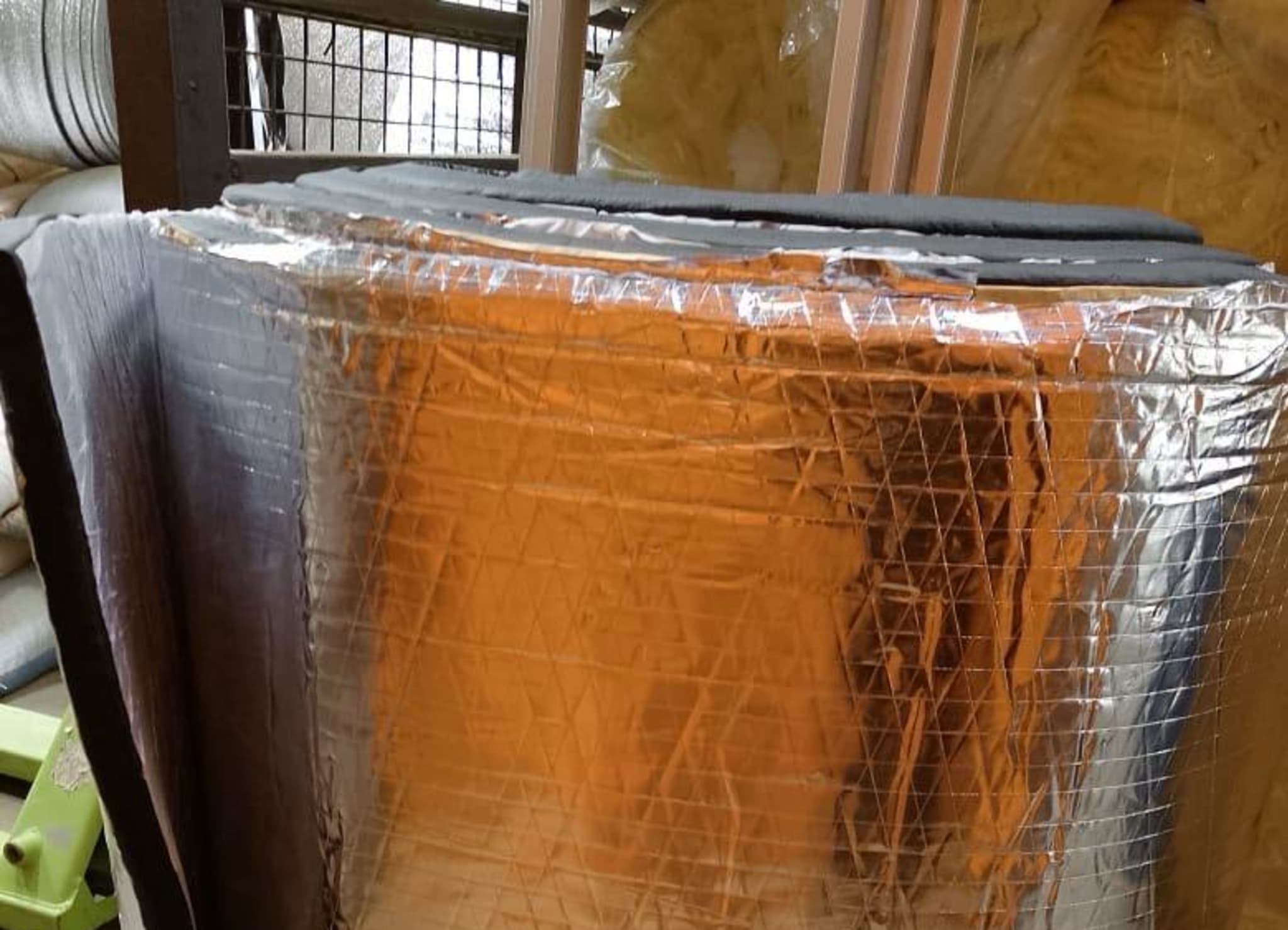
Insulation with an integral vapour barrier for service below roughly 200°C. Specified where moisture exclusion matters as much as thermal performance, particularly in the 60–150°C band where corrosion under insulation develops.
Fire-rated products
Sealants and foams that maintain a fire barrier rating at penetrations. Selected on rating retention rather than on thermal conductivity, and required wherever a service passes through a rated wall or floor.
How to Choose the Right Thermal Insulation
Work down from the hot face. Establish the maximum continuous service temperature at the surface being insulated, then select the highest-temperature layer to sit against it — ceramic fibre above 1000°C, calcium silicate or mineral wool below. Next ask whether the insulation carries load: at pipe supports, under cladding, and behind a structural hot face, a rigid board is required or the material will crush and become a permanent thermal bridge. Then ask about moisture. Outdoors, or anywhere between roughly 60°C and 150°C, the specification must include a continuous vapour barrier and sealed laps, because wet insulation both stops working and corrodes the steel beneath it. Finally, consider duty cycle: on equipment that starts and stops frequently, low thermal mass materials such as ceramic fibre cut the fuel spent reheating the lining on every cycle, which on a batch kiln or furnace often outweighs the difference in steady-state conductivity.
Installation & Handling Notes
- Butt joints with slight compression rather than flush — insulation settles in service, and flush joints open into direct heat-loss paths.
- Use rigid, load-bearing insulation at pipe supports; soft material crushed at a support becomes a permanent thermal bridge.
- Maintain a continuous vapour barrier below 150°C and seal every lap and penetration, or moisture will reach the steel and corrode it out of sight.
- Orient cladding laps to shed water on outdoor and horizontal runs; upward-facing laps are the most common route for water ingress.
- Replace wet insulation rather than drying it in place, and fix the moisture route at the same time or the replacement fails the same way.
Choosing Between Insulation Materials
Ceramic fibre vs mineral wool
Ceramic fibre handles far higher temperatures — up to 1260°C against roughly 1000°C — and has much lower thermal mass, making it the choice for furnace and kiln linings. Mineral wool is substantially more economical per square metre and is the better answer for the large low- and medium-temperature areas of ducting, casings, and general pipework.
Ceramic fibre vs calcium silicate
Ceramic fibre goes hotter and has lower thermal mass; calcium silicate is rigid and load-bearing. Use fibre at the hot face and where cycling matters, and calcium silicate wherever the insulation must resist compression or provide structural backup. They are frequently used together rather than as alternatives.
Calcium silicate vs mineral wool
Calcium silicate holds its thickness under load and reaches 1000°C, which is why it is standard on high-pressure steam lines and at pipe supports. Mineral wool is cheaper and easier to fit over large areas but compresses under sustained load, so it should not carry structural duty.
Foil-faced vs unfaced insulation
Below about 200°C the deciding factor is usually moisture rather than thermal performance. Foil facing provides an integral vapour barrier that keeps water off the steel, which is what prevents corrosion under insulation. Above that range, where condensation is not a concern, unfaced material is normally sufficient.
Thermal Insulation FAQs
How do I choose the right industrial insulation material?
Start with the maximum continuous service temperature at the surface, then check three further constraints: whether the insulation must carry load (which calls for rigid board rather than blanket), whether moisture is a factor (which calls for a vapour barrier), and how often the equipment cycles (which favours low thermal mass materials such as ceramic fibre). Temperature alone rarely determines the right answer.
What is the maximum temperature for industrial insulation?
It depends on the material family. Ceramic fibre products reach 1260°C, calcium silicate and rockwool board around 1000°C, standard rockwool blanket about 600°C, and foil-faced products roughly 120–200°C. Above 1260°C the requirement moves from insulation to refractory materials such as bricks and castables.
Why does insulation stop working when it gets wet?
Because the insulating effect comes from air trapped in the material's structure, and water displaces that air. Worse, once wetting causes fibre settlement and binder degradation, the original thickness and performance do not return on drying. Persistently wet sections should be replaced and the cause of ingress corrected.
What is corrosion under insulation and how is it prevented?
CUI is corrosion of the pipe or vessel wall caused by water held against the steel beneath insulation. It is most aggressive between roughly 60°C and 150°C. Prevention is a continuous vapour barrier, every lap and penetration sealed, cladding detailed to shed water, and load-bearing insulation at supports so the material is not crushed into a moisture trap.
How much fuel can industrial insulation save?
The recoverable saving is a function of surface area, how far surface temperature sits above ambient, and operating hours — so it varies widely and is worth measuring with a thermal survey before committing to a scope. On continuously operating plant, even a modest reduction in surface temperature across a large area compounds into a significant annual figure.
Does insulation thickness matter more than material choice?
Only within a material's valid operating range. Adding thickness to a material that is above its temperature limit, crushed under load, or waterlogged will not fix any of those problems. Get the material family right for the conditions first, then optimise thickness for heat loss or personnel protection.
When does insulation become a safety requirement rather than an efficiency measure?
Accessible surfaces above roughly 60°C present a contact burn hazard, so personnel protection insulation is specified on a safety basis in occupied areas. This can call for different thickness than a heat-loss calculation would produce, and the two requirements should be checked separately.
Industries Using Thermal Insulation
Technical Guides
Selection and maintenance guidance from our engineering team.
Industrial Thermal Insulation: A Complete Selection Guide
How the material families differ and which constraint should drive the choice.
How to Reduce Heat Loss in Industrial Furnaces
Where furnace heat is actually lost, and what changes the fuel bill.
Industrial Thermal Audit Checklist
What to measure before specifying an insulation upgrade.
Related Categories
Ceramic Fibre Products
Ceramic Fibre Products supplied by Zenco Systems Ltd for industrial, commercial, and institutional buyers across Kenya and East Africa.
Calcium Silicate Products
Calcium Silicate Products supplied by Zenco Systems Ltd for industrial, commercial, and institutional buyers across Kenya and East Africa.
Mineral Wool Products
Mineral Wool Products supplied by Zenco Systems Ltd for industrial, commercial, and institutional buyers across Kenya and East Africa.
High Temperature Textiles
High Temperature Textiles supplied by Zenco Systems Ltd for industrial, commercial, and institutional buyers across Kenya and East Africa.