Category catalog
Gaskets & Packings
Gaskets and packings are the smallest items in an industrial materials budget and among the most consequential, because they are the point at which containment is either maintained or lost.
Products in Gaskets & Packings
3 catalog items available for review

Understanding Gaskets & Packings
Gaskets and packings are the smallest items in an industrial materials budget and among the most consequential, because they are the point at which containment is either maintained or lost. A packing that fails on a pump shaft leaks product; a gasket that fails on a furnace door admits air that raises fuel consumption every hour the plant runs; a flange seal that fails on a hot line becomes a safety issue rather than an efficiency one. What makes selection harder than it appears is that three variables interact — temperature, pressure, and the medium being sealed — and a product that performs well against two of them can fail quickly against the third. Temperature ratings alone are a poor guide, particularly at flange faces and door frames, where the actual joint temperature is usually well below the process temperature inside. Zenco Systems supplies graphite packing, high temperature gaskets, and gasket tapes across Kenya and East Africa for valve, pump, flange, and access door duty.
Supply & Delivery
Zenco Systems Ltd supplies Gaskets & Packings to industrial buyers across East Africa. Availability, packaging, transport, and documentation are confirmed by the sales team before dispatch.
Gasket and Packing Product Forms
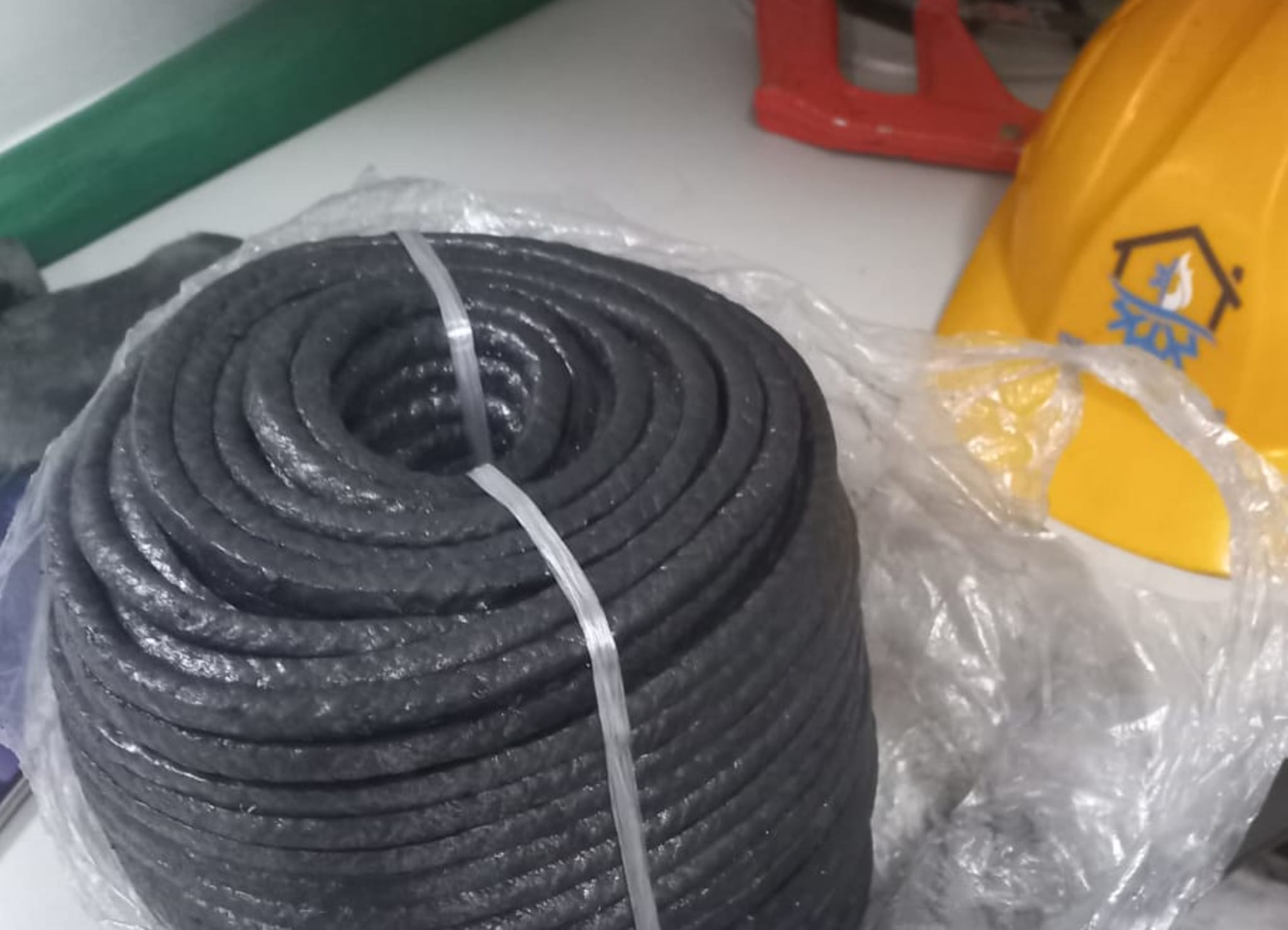
Graphite packing (450°C)
Braided graphite packing for valve stems and pump shafts, where a dynamic seal must hold against pressure while accommodating shaft movement and wear.
High-temperature gasket (300°C)
Flange gasket for hot process lines, sized and cut to the flange profile and compressed evenly across the face to maintain a pressure-tight seal.
High temperature gasket tape (1200°C)
Tape form for sealing furnace and kiln joints, duct connections, and access doors where a continuous compressible seal is needed along an extended joint.
High-temperature insulation gasket (1000°C)
Combined sealing and insulating duty at joints where both air exclusion and heat loss reduction are required, typically on furnace covers and hot access points.
High-temperature textile gasket (1000°C)
Woven gasket for furnace doors, covers, and inspection openings, tolerating repeated opening and thermal cycling better than rigid sheet materials.
How to Choose the Right Gaskets & Packings
Specify against three variables together rather than temperature alone: the temperature at the joint face, the pressure being contained, and the medium. For dynamic seals — valve stems and pump shafts — graphite packing is the standard choice because it accommodates shaft movement while sealing against pressure, and its 450°C rating covers most valve duty. For static flange joints on hot lines, a high temperature gasket cut to the flange profile is appropriate, with the rating checked against the actual flange face temperature rather than the process temperature. For furnace and kiln joints, doors, and duct connections, gasket tape and textile gaskets rated to 1000–1200°C handle the combination of high temperature, thermal movement, and repeated opening that would destroy a conventional sheet gasket. Where a joint must both seal and insulate — furnace covers and hot access points — an insulation gasket serves both requirements in one item.
Installation & Handling Notes
- Compress gaskets evenly across the full face; uneven compression opens a leak path at the least loaded point regardless of how good the material is.
- Check the temperature at the joint face rather than the process temperature — flange faces and door frames usually run considerably cooler.
- Adjust and replace valve and pump packing on a maintenance schedule; packing is a wearing item and over-tightening a worn packing damages the stem.
- Replace furnace and duct joint seals at every shutdown — the material cost is trivial against the fuel lost to continuous in-leakage.
- Match the product to whether the seal is static or dynamic; a gasket on a moving shaft, or packing on a flange face, will fail quickly.
Choosing Between Sealing Products
Graphite packing vs gasket
Packing is for dynamic seals where a shaft or stem moves — valves and pumps — and is designed to be adjusted and replaced as it wears. Gaskets are static seals compressed between two fixed faces. Substituting one for the other fails quickly in either direction.
Textile gasket vs sheet gasket
Woven textile gaskets handle much higher temperatures and tolerate repeated opening and thermal cycling, which suits furnace doors and covers. Sheet gaskets are better at lower-temperature flange duty where pressure sealing and chemical resistance dominate.
Gasket tape vs cut gasket
Tape suits long or irregular joints — duct connections, furnace door frames, access openings — where a continuous seal is needed along an extended run. Cut gaskets are appropriate for defined flange profiles requiring even compression across a known face.
Insulation gasket vs standard gasket
An insulation gasket seals and reduces heat loss at the same joint, which is worthwhile on furnace covers and hot access points where both matter. A standard gasket is sufficient where the only requirement is to exclude air or contain pressure.
Gaskets & Packings FAQs
What is the difference between a gasket and a packing?
A gasket is a static seal compressed between two fixed faces, such as a flange joint or a door frame. A packing is a dynamic seal around a moving component, such as a valve stem or pump shaft, and is designed to be adjusted and replaced as it wears. They are not interchangeable.
What temperature can graphite packing withstand?
Our graphite packing is rated to 450°C, which covers the great majority of valve stem and pump shaft duty. Selection should also account for the pressure being contained and the medium being sealed, since a packing adequate on temperature can still fail on chemical compatibility or pressure.
Which gasket should I use on a furnace door?
A high-temperature textile gasket rated to 1000°C, or gasket tape rated to 1200°C for a longer or irregular joint. These tolerate the repeated opening and thermal cycling that a furnace door imposes, which would quickly destroy a conventional sheet gasket.
How do I choose a gasket temperature rating?
Rate against the temperature at the joint face, not the process temperature inside the equipment — flange faces and door frames typically run considerably cooler. Then check pressure and the medium being sealed, because a gasket adequate on temperature alone can still fail on either of the other two.
Why do gaskets leak even when correctly rated?
Most often because compression is uneven across the face, which opens a leak path at the least loaded point regardless of material quality. Bolt tightening sequence, flange face condition, and correct gasket sizing matter as much as the specification itself.
How often should valve packing be replaced?
On a maintenance schedule, since packing is a wearing item. Repeatedly tightening a worn packing to stop a leak damages the valve stem and turns an inexpensive replacement into a much larger repair, so scheduled replacement is more economical than adjusting until failure.
Do you supply gaskets cut to a specific flange profile?
Yes. Gaskets are commonly needed cut to a specific flange, door, or cover profile. Send the dimensions along with the joint face temperature, the pressure, and the medium being sealed, and the sales team will confirm the appropriate product and quantity.
Industries Using Gaskets & Packings
Technical Guides
Selection and maintenance guidance from our engineering team.
Related Categories
High Temperature Textiles
High Temperature Textiles supplied by Zenco Systems Ltd for industrial, commercial, and institutional buyers across Kenya and East Africa.
Thermal Insulation
Thermal Insulation supplied by Zenco Systems Ltd for industrial, commercial, and institutional buyers across Kenya and East Africa.
Refractory Accessories
Refractory Accessories supplied by Zenco Systems Ltd for industrial, commercial, and institutional buyers across Kenya and East Africa.